
Snap it, upload it, find out what it isIdentify a Photo

Photo

Fill the frame with the thing you want identified, in good light.

Rock Identifier

This rock identifier names a rock or mineral from one photo, with its properties and simple tests to check it.

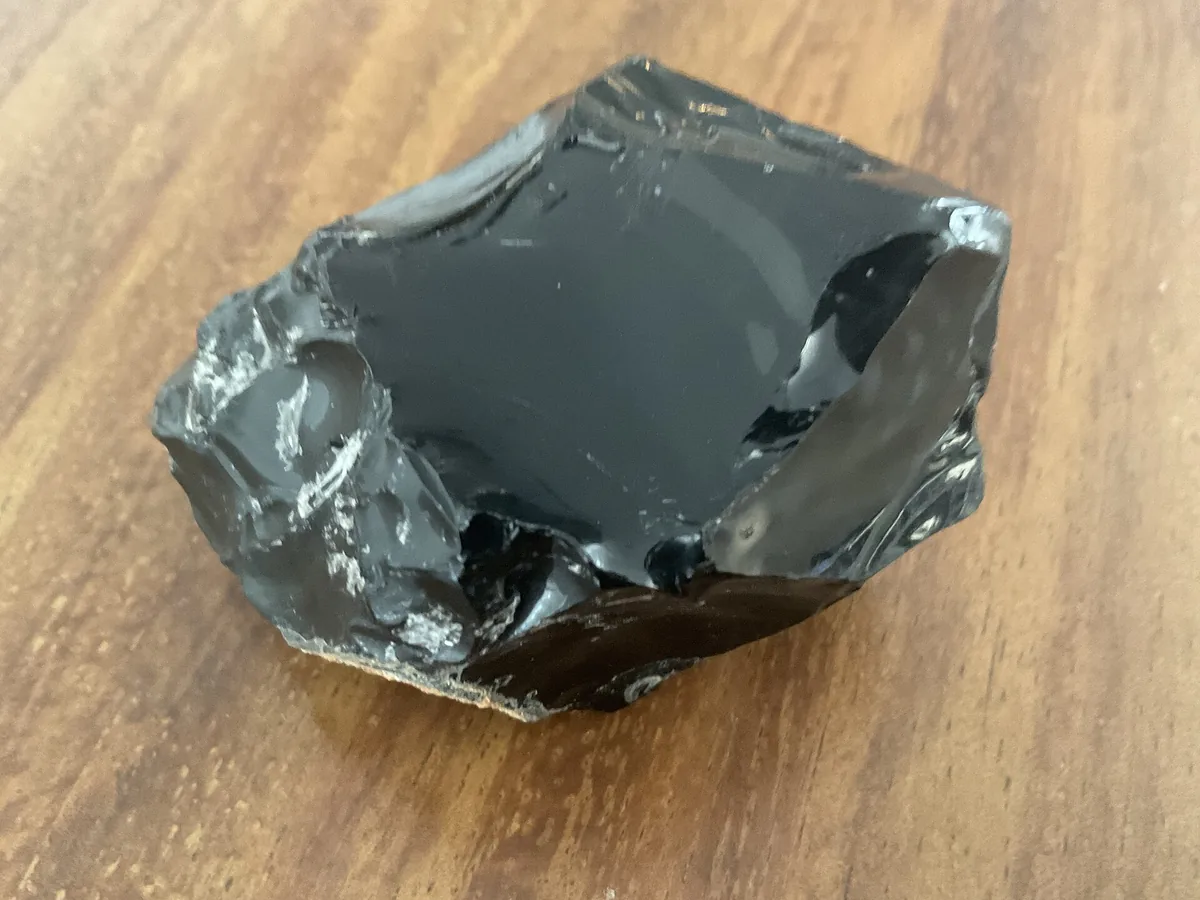
A piece of glossy black obsidian on a wooden table, an example photo for the rock identifier
Example

Obsidian

Igneous rock · Volcanic glass

Confidence: 85%

This specimen is a chunk of obsidian, a naturally occurring volcanic glass known for its jet-black color, vitreous luster, and sharp conchoidal fracture. Because man-made black glass or industrial slag can look nearly identical in photos, physical testing or provenance may be needed for absolute certainty.

Properties

Rock type
Extrusive igneous (volcanic glass)
Composition
Rich in silica (SiO2), typically 70% or more
Mohs hardness
5.0 - 5.5
Luster
Vitreous (glassy)

How to confirm

Conchoidal fracture
Breaks with smooth, curved, shell-like surfaces and extremely sharp edges.
Scratch test
A hardened steel file or knife (hardness ~5.5-6.5) can scratch it, but standard window glass is roughly equal in hardness.
Streak test
Leaves a white or colorless streak on unglazed porcelain.
Bubble check
Inspect thin edges with a loupe; industrial slag often contains spherical gas bubbles, whereas obsidian typically shows flow bands or microscopic crystal microl

Where it is found

Formation
Forms when high-silica felsic lava cools rapidly with minimal crystal growth.
Typical environments
Rhyolitic volcanic domes, lava flows, and caldera margins.
Notable locations
Oregon, California, Iceland, Mexico, Italy, and Japan.

Quick Facts

  • Because obsidian lacks a crystalline structure, its fracture edges can reach molecular thinness, sharper than modern surgical steel scalpels.
  • Native peoples across the Americas and Mediterranean prized obsidian for crafting razor-sharp arrowheads, spear points, and blades.
  • Despite its dark black appearance, obsidian is chemically similar to light-colored granite or rhyolite; tiny inclusions of magnetite or iron oxides give it its dark hue.
  • Over millions of years, volcanic glass naturally devitrifies and breaks down into fine crystalline quartz and feldspar.

Did you know?

Some modern heart and plastic surgeons have used custom obsidian scalpels because they cause less tissue trauma and promote faster healing with reduced scarring compared to steel blades.

It could also be

  • Black Glass Slag (Cullet)12%
  • Black Onyx or Chert2%
  • Jet (Lignite coal)1%

An example answer. Upload your own photo to identify it.

A piece of glossy black obsidian on a wooden table, the sample photo the rock identifier named as Obsidian

What the rock identifier tells you from one photo

One photo of one rock goes in. A text answer card comes back, usually in 10 to 20 seconds.

Upload a photo of a pebble, a beach stone, a chunk from a hike or a specimen from a drawer. The rock identifier names it and says whether it is an igneous, sedimentary or metamorphic rock, or a mineral. Every answer has three fixed groups. Properties gives type, composition, Mohs hardness and luster. How to confirm lists simple home tests and the result to expect. Where it is found explains how it forms and typical places.

Below those come quick facts, one Did you know? note, the AI's own confidence and two or three other rocks it could be. Our sample photo of a glossy black chunk came back as Obsidian, Igneous rock · Volcanic glass, at 85%, with a hardness of 5.0 to 5.5.

The answer is AI output from a picture, so check it against the rock in your hand.

Made for

  • Hikers and rockhounds
  • Parents fielding kids' rock questions
  • Geology students
  • Gardeners digging up stones
  • Beachcombers
  • People sorting an old collection

Home tests the rock identifier picks for your rock

A photo shows color, grain, layers and shine. It can't show hardness, streak color, weight or magnetism, and those are often what separate two rocks. So the How to confirm group gives two to four tests chosen to tell your rock from its own look-alikes, each with the result you should see.

For our obsidian sample the card listed four: a shell-like conchoidal fracture with very sharp edges, a white or colorless streak on unglazed porcelain, a steel knife or file that scratches it, and a look at thin edges with a loupe, since slag glass often has round gas bubbles. Other rocks get other tests, such as a magnet, a drop of vinegar or a weight check.

Why look-alikes stay on the list

Some rocks can't be told apart from a photo at all. Man-made black glass and furnace slag look almost the same as obsidian on camera, and the AI is told to say so and lower its confidence when that happens. On our sample it did: the summary warned that slag can look nearly identical, the score stopped at 85%, and the alternatives were Black Glass Slag (Cullet) at 12%, Black Onyx or Chert at 2% and Jet (Lignite coal) at 1%.

The percentage is the rock identifier's own estimate, not a tested accuracy rate. A close second choice is a sign to run the home tests before you label the rock.

When a rock identifier photo isn't enough

Some rocks and minerals are hard to tell apart in a photo and need to be seen in person from all sides. When a rock matters to you, show it to someone who can hold it: your state geological survey, a natural science museum, a college geology department, a rock shop, or a local gem and mineral club.

The same goes for value. This rock identifier gives no price at all. Ask a mineral dealer or an appraiser if you think a specimen is worth money.

Before you scan a rock: prep and a small test kit

A rock in the field is dusty and weathered, so a minute of prep shows the rock identifier much more.

  • Brush or rinse off soil and let the rock dry, so the grains and the shine show.
  • If it is already broken, photograph the fresh broken face: weathering hides grain and color on the outside.
  • Get close enough to show the grain size, any layers or bands, and holes or bubbles.
  • Fill the frame with one rock in daylight, with the flash off to avoid glare on shiny surfaces.
  • Write down where you found it yourself, since the tool takes a photo and no text, then compare it with the Where it is found group.
  • Keep a steel nail, an unglazed tile, a magnet and some vinegar nearby for the tests the card suggests.
  • Take care with sharp edges when you scratch or break a glassy rock like obsidian.
  • If the answer stays broad, try the rock identifier on another side; each new scan uses one of your free daily scans.

Frequently asked questions

Clean it, take one sharp photo in daylight and upload it to the rock identifier above. You get a name, the rock type, its hardness and luster, and two to four home tests. Run those tests, then compare the results with what the card said to expect.

Yes. Every visitor gets one free scans a day with no sign-up and no credit card. The allowance is shared across all the identifiers on this site and resets each day at midnight UTC.

No. The rock identifier runs in a web browser on a computer or a phone. On a phone, take the picture first, then upload it from your photos. It accepts JPG, PNG, WebP or HEIC, one photo per scan.

There is no tested accuracy figure, so we don't quote one. Each answer shows the AI's own confidence and the rocks it could also be. Treat it as a first opinion and settle close calls with the home tests or an expert.

No. The rock identifier is told not to estimate a price. It tells you what the rock is likely to be and where it forms. For value, show the specimen to a mineral dealer or an appraiser.

We can only speak for this rock identifier. It answers one question, what this rock is, with a fixed answer card: name, rock type, properties, home tests, where it forms, a confidence score and ranked look-alikes.

No. This rock identifier doesn't search the web for similar pictures or shopping pages. It looks at your photo and answers in geology terms, so it works on a rock photo you just took that has never been online.

A mineral is one naturally occurring solid with its own chemical makeup and crystal structure, like quartz or calcite. A rock is a mix of one or more minerals, like granite or basalt, or a natural glass, like obsidian. The answer card says which of the two you have.

Check the alternatives first, especially one with a score close to the top answer. Then try a photo of a cleaner or freshly broken side, or run the suggested tests. For a polished or tumbled stone, the crystal identifier may suit it better.

Your photo is sent to the AI model only to identify it; we do not save it or use it to train AI models. The answer isn't saved either. It stays on the page until you refresh or leave, so note the name if you want to keep it.