
Snap it, upload it, find out what it isIdentify a Photo

Photo

Fill the frame with the thing you want identified, in good light.

Coin Identifier

This coin identifier names a coin from one photo: country, series, years and a rough value range.

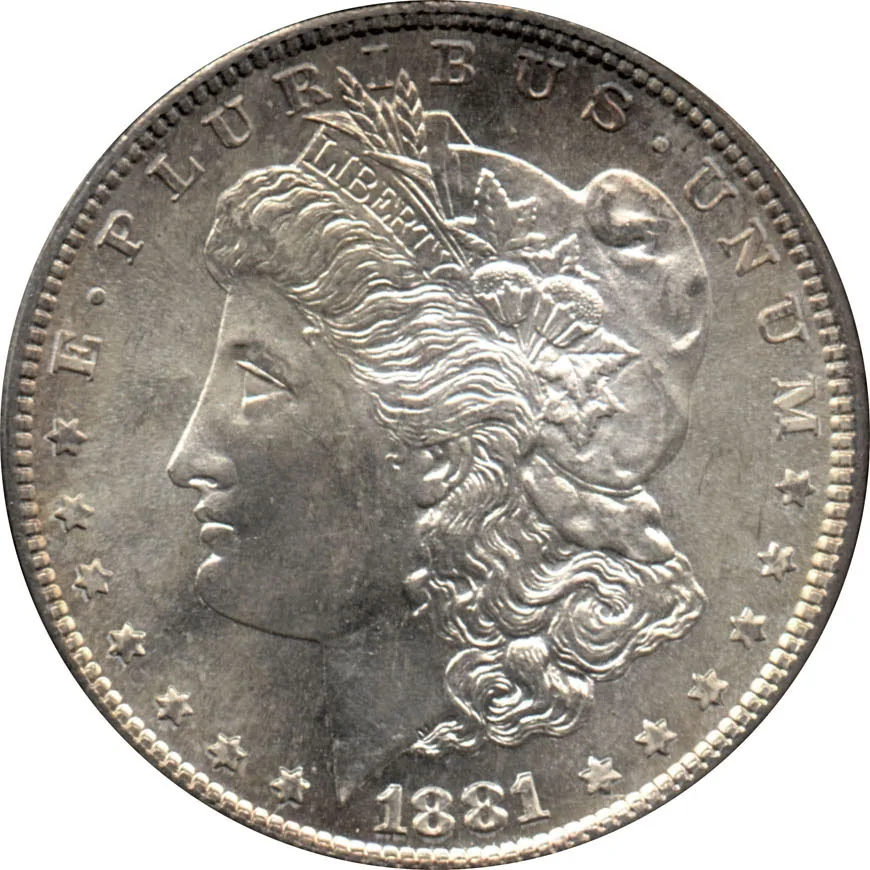
A silver Morgan dollar dated 1881, an example photo for the coin identifier
Example

1881 Morgan Silver Dollar (United States)

Coin · United States Currency

Confidence: 98%

Values are rough ranges. What a coin is worth depends on its grade, variety and authenticity, so ask a coin dealer or a grading service such as PCGS or NGC before you buy or sell.

This is an 1881 United States Morgan silver dollar, depicting the left-facing profile of Liberty wearing a Phrygian cap adorned with wheat and cotton. The motto 'E PLURIBUS UNUM' arcs above the head, flanked by thirteen stars, with the date '1881' centered at the bottom. The mint mark, located on the reverse above the 'DO' in 'DOLLAR', is not visible on this obverse-only photo, so it could be from Philadelphia (no mint mark), San Francisco (S), New Orleans (O), or Carson City (CC).

Coin

Country
United States
Denomination
1 Dollar ($1 USD)
Series
Morgan Dollar (1878–1904, 1921)
Mint Mark
Located on reverse (P, S, O, or CC)

Specs

Composition
90% Silver, 10% Copper
Weight
26.73 g
Diameter
38.1 mm

Value

Circulated
$30 – $60 (higher for CC mint)
Uncirculated
$65 – $600+ depending on mint & grade
Note
Carson City (1881-CC) carries a huge premium; grade and authenticity greatly affect value

Quick Facts

  • Designed by United States Mint Assistant Engraver George T. Morgan, whose initial 'M' appears at the truncation of Liberty's neck.
  • Morgan used schoolteacher Anna Willess Williams as the model for the profile of Lady Liberty.
  • The 1881-S issue is celebrated among collectors for frequently possessing one of the sharpest strikes and brightest lustres in the entire Morgan series.
  • The coin contains roughly 0.77344 troy ounces of pure silver.

Did you know?

Anna Willess Williams initially sat for the portrait on the condition of anonymity, but when a newspaper exposed her identity as the 'Silver Dollar Girl', she was hounded by reporters and nearly lost her teaching job.

It could also be

  • 1881-S Morgan Silver Dollar50%
  • 1881-O Morgan Silver Dollar25%
  • 1881-CC Morgan Silver Dollar15%

An example answer. Upload your own photo to identify it.

What this coin identifier tells you about a coin

One photo of one coin goes in. A text answer card comes out with the coin's name, its specs and a rough value range.

Upload a photo and the coin identifier names the coin as country, denomination and series, with the year and mint mark when it can read them. If the date is worn or the mint mark is out of view, it gives the years the series was struck instead of picking one.

The answer card has three fixed groups. Coin covers country, denomination, series, years minted and mint mark. Specs lists metal, weight and diameter. Value gives a broad range in US dollars from circulated to uncirculated condition, never a single price.

Below those you get a few quick facts, one Did you know? note, and two or three other coins it could be, each with the AI's own confidence. On our sample photo, an 1881 Morgan dollar, the card listed Morgan Dollar (1878 to 1904, 1921), 90% silver, 26.73 g and 38.1 mm.

Made for

  • Inherited coin jars
  • Old pocket change
  • Flea market and estate sale finds
  • Metal detecting finds
  • New collectors sorting a lot

How to identify a coin by picture

Three steps and usually 10 to 20 seconds of waiting. No app, no account, no sign-up.

  1. 1

    Photograph the side with the date

    Lay the coin flat in good light so it fills the frame. Keep glare off the numbers and lettering, since those are what the coin identifier reads first.

  2. 2

    Upload the photo

    Drag it in or tap to pick a JPG, PNG, WebP or HEIC file, one coin per photo. Your browser shrinks it before sending, then press Identify the Coin.

  3. 3

    Read the card, then scan the other side

    The card names the coin and fills in Coin, Specs and Value. If it says the mint mark sits on the side you didn't photograph, upload that side next to narrow the alternatives.

What a coin identifier can and can't tell you

Know the limits of a coin identifier before you buy or sell anything based on its answer.

A value range, not an appraisal

Every coin answer carries a note that values are rough ranges. Grade, variety and authenticity decide the real price, so ask a coin dealer or a grading service such as PCGS or NGC before you buy or sell.

No authenticity or metal test

A photo coin identifier only sees the image. It can't weigh the coin, test the metal or catch a well made copy, so a silver or gold candidate still needs a professional look.

Confidence is the AI's own estimate

The percentage is how sure the AI says it is, and it is told to go lower on worn, partial or look-alike coins. It is not a measured accuracy rate.

Your photo is not kept

Your photo is sent to the AI model only to identify it; we do not save it or use it to train AI models. The answer stays on the page until you refresh or leave, and there is no saved history.

Frequently asked questions

Yes. This coin identifier gives every visitor one free scans a day, with no sign-up and no credit card. The allowance is shared across all the identifiers on the site and resets each day at midnight UTC.

Start with what is printed on the coin: the country name, the face value, the date and any small mint mark letter. Then upload a clear photo here and the coin identifier turns those clues into a series name, specs and a value range you can look up further.

For a first idea, the Value group on the card gives a circulated to uncirculated range in US dollars. For real prices, check a grading service's price guide and auction records, such as those PCGS and NGC publish, or ask a coin dealer to see the coin in hand.

Yes. Take the photo with your phone camera, then open this page in your phone's browser and upload it from your photos. There is no app to install and no live camera scanning, just one photo per scan.

Because the mint mark wasn't visible in the photo. Our sample was the front of an 1881 Morgan dollar; the card explained that the mint mark is on the reverse and listed 1881-S, 1881-O and 1881-CC as alternatives. A photo of the other side lets it pick one.

You still get an answer. When the date or mint mark can't be read, the coin identifier names the series and gives the years it was made, so you know which dates to compare against in a catalog.

No. A photo can't show weight, metal content or the fine detail a grader checks. The Specs group tells you what the genuine coin should weigh and measure, which you can compare with a kitchen scale and a ruler.

No. Coin guides warn that cleaning an old or valuable coin can lower its value. Photograph it as it is, in soft daylight, and tilt it slightly if glare hides the date.

There is no accuracy figure to quote. The card shows the AI's own confidence and two or three alternatives; on our Morgan dollar sample it gave 98% for the coin and split the mint options between S, O and CC. Treat the answer as a shortlist to check.

No. The coin identifier reads one photo of one coin per scan, and each scan uses one of your one free scans for the day. For a jar of coins, pull out the ones with dates or designs you don't recognize and scan those one by one.