
Snap it, upload it, find out what it isIdentify a Photo

Photo

Fill the frame with the thing you want identified, in good light.

Dog Breed Identifier

This dog breed identifier names your dog's most likely breed or mix from one photo, with temperament and care needs.

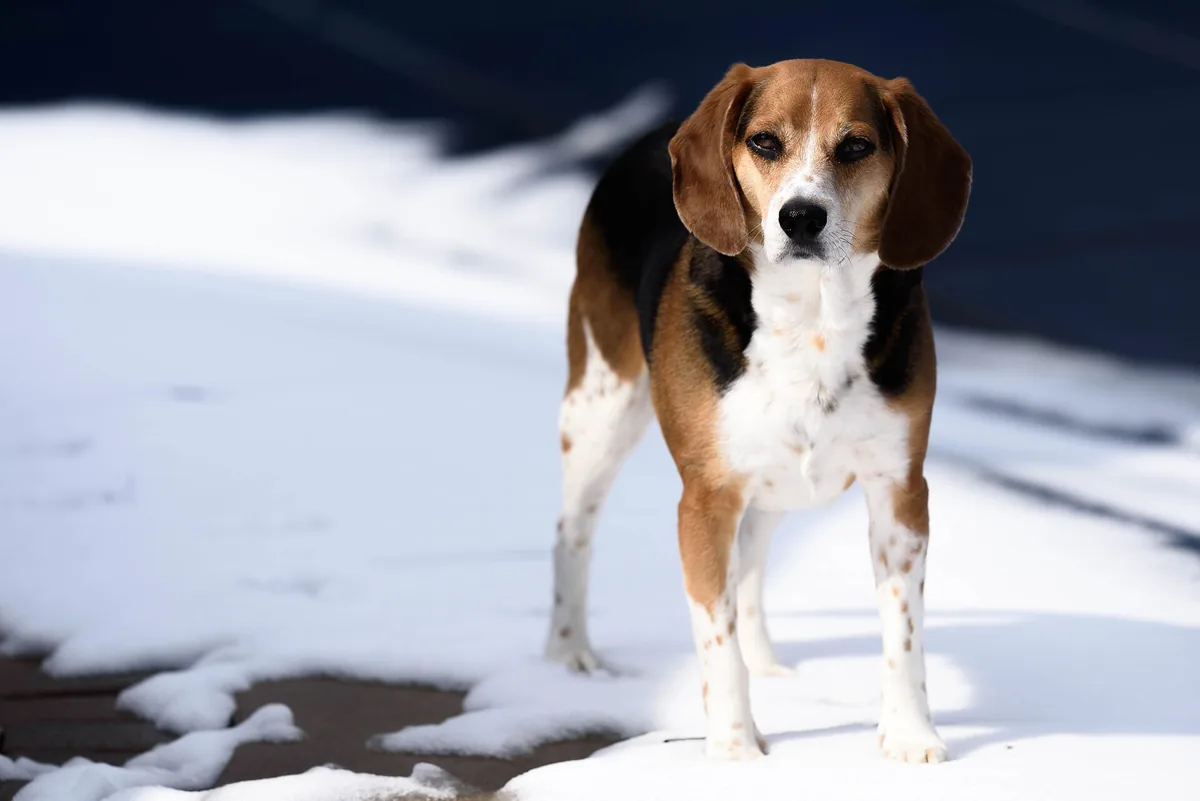
A tricolour beagle standing in the snow, an example photo for the dog breed identifier
Example

Beagle

Dog breed · Hound group

Confidence: 92%

This dog is a Beagle, characterized by its classic tricolor black, white, and tan coat with faint ticking on the legs. It features long, rounded drop ears, expressive dark hazel eyes, and a compact, sturdy hound build.

Breed

Group
Hound (scent hound)
Origin
United Kingdom
Size
Small to medium (13-15 inches, 20-30 lbs)
Lifespan
12-15 years

Temperament

Energy Level
Moderate to high
With Children
Excellent; friendly and gentle
With Other Pets
Very good, especially with other dogs
Trainability
Moderate; food-motivated but easily distracted by scents

Care

Exercise
At least 1 hour daily of walking and scent work
Grooming
Low; weekly brushing with a rubber mitt
Shedding
Moderate year-round, heavier in spring

Quick Facts

  • Beagles were originally bred in England to hunt hare in packs, a sport known as beagling.
  • Their sense of smell is among the best in the dog world, possessing around 220 million scent receptors.
  • Nearly all purebred Beagles have a white tip on their tail, historically bred to help hunters spot them in tall brush.
  • They are widely employed at international airports to detect prohibited agricultural products.

Did you know?

The iconic cartoon character Snoopy from the comic strip Peanuts is officially a Beagle.

It could also be

  • Harrier35%
  • American English Coonhound20%
  • Treeing Walker Coonhound15%

An example answer. Upload your own photo to identify it.

A tricolour beagle in the snow, the sample photo the dog breed identifier named as a Beagle

What Breed Is My Dog? A Photo Answer in One Card

The dog breed identifier reads what a photo shows and turns it into a breed name plus a short profile of that breed.

Upload one photo and the dog breed identifier looks at the traits breeds differ by: ear shape and set, muzzle length, coat color and texture, build and size. It answers with the most likely breed, its breed group, and how sure the AI is, usually in 10 to 20 seconds.

When a dog doesn't fit one breed, the dog breed identifier is told to name it as a mix of the most likely breeds and list those breeds as alternatives. The summary then says that only a DNA test can confirm a mixed dog's ancestry.

Below the name, three groups fill in the profile: Breed (group, origin, size, lifespan), Temperament (energy, kids, other pets, trainability) and Care (exercise, grooming, shedding). It is a read of appearance, not of pedigree, so treat it as AI output to check against your own dog.

Made for

  • New rescue owners
  • Curious dog walkers
  • Foster volunteers
  • Future adopters
  • Mixed-breed owners

Why Use This Dog Breed Identifier

What you get on the answer card that a name and a percentage alone don't tell you.

  • Mixed dogs are named as mixes

    A dog that looks like two breeds is not forced into one. The dog breed identifier is told to answer with a mix, such as Labrador Retriever and Poodle mix, and to list each likely breed as an alternative.

  • The breed profile comes with the name

    On our Beagle sample the card gave 13 to 15 inches, 20 to 30 lbs and a 12 to 15 year lifespan. Care said at least 1 hour daily of walking and scent work, and weekly brushing with a rubber mitt.

  • Near relatives, ranked

    Beagle came back at 92%. It could also be listed Harrier 35%, American English Coonhound 20% and Treeing Walker Coonhound 15%, three other scent hounds with a similar build. Open those breeds next if the top answer feels off.

  • Honest about how sure it is

    Confidence is the AI's own estimate, and it is told to go lower when the photo is blurry, partial or the breeds look alike. A modest score plus close runners-up is a hint that your dog may be a mix.

  • A web page, not another app

    The dog breed identifier runs in your browser with nothing to install and no sign-up. You get one free scans a day, and Your photo is sent to the AI model only to identify it; we do not save it or use it to train AI models.

When a Dog Breed Identifier Helps

Six everyday moments when knowing the likely breed changes what you do next.

You just adopted a rescue

If the shelter paperwork just says mixed breed, a dog breed identifier read gives you a starting point for exercise, grooming and training, and the breeds to read up on first.

You met a dog on a walk

Ask the owner if you can take a quick photo, then upload it to the dog breed identifier. You get the breed name and what living with one is usually like, which helps if you are choosing a future dog.

A listing names a breed

If an ad or shelter page says Husky mix, check what the photo actually looks like. The result is a second opinion on appearance, not proof, so ask for papers or a DNA result before paying for a pedigree.

Planning walks and grooming

The Care group on the dog breed identifier card gives exercise, grooming and shedding notes for the breed named. Use them to plan daily walks and brushing, then adjust to your own dog.

Before buying a DNA kit

If the dog breed identifier names one breed with high confidence and your dog matches the profile, you may not need more. If it names a mix with close scores, a DNA test is the way to learn the real ancestry.

Writing a foster profile

Foster volunteers can use a dog breed identifier result as a draft description: likely looks, typical energy and how the breed usually does with kids and other pets. Describe it as looks-based, since only a DNA test confirms ancestry.

Frequently asked questions

Yes, up to one scans a day, with no sign-up and no credit card. It is not an app you download: the dog breed identifier is a web page, and on a phone you upload a photo from your gallery.

Yes, as far as looks go. A dog breed identifier reads a clear picture of the ears, muzzle, coat and build, which is enough to name the closest breed or mix. A picture can't show ancestry, so a mixed dog's real background needs a DNA test.

Look for one that shows how sure it is, lists look-alike breeds, handles mixes honestly and tells you what happens to your photo. This dog breed identifier does all four in your browser, with no install.

This page doesn't do that. It doesn't change your photo or simulate a dog's eyesight; it names the breed in the photo and describes it in text.

We don't quote an accuracy rate because we haven't measured one. Each answer shows the AI's own confidence, and a sharp, well-lit photo of one dog gives it the most to go on. Compare the alternatives when the score is modest.

The dog breed identifier names it as a mix of the most likely breeds and lists them as alternatives, each with a score. That tells you which breed profiles to read. It is a guess from looks, not a family tree.

No. A DNA test reads a cheek swab and can find breeds that don't show in a dog's looks. A photo answer is quick and free, useful for a first idea or a dog you can't swab, such as one you met on a walk.

One dog, filling most of the frame, in good light. A side or three-quarter view that shows the head, ears and body outline helps. Take off coats and bandanas that hide the coat.

Your photo is sent to the AI model only to identify it; we do not save it or use it to train AI models. The answer stays on the page until you refresh or leave; there is no history or account.

one scans a day per visitor, shared with every other identifier on the site, and the count resets at midnight UTC. Identify again on the same photo uses another scan.